
Multi-Function Countertop Appliances: Which Ones Are Worth the Space (and Which Aren’t)
Every “does it all” countertop appliance makes the same pitch: buy one thing, replace five. Some genuinely deliver on that. Others are a single mediocre gadget wearing five different marketing bullet points. The difference almost always comes down to one question that has nothing to do with the number of functions listed on the box.
The test isn’t how many things an appliance claims to do. It’s whether those functions share one genuinely good core mechanism, or whether the box is just several weak mechanisms crammed together to sound impressive.
The Test That Actually Matters
A multi-cooker that pressure cooks, slow cooks, steams, and sautés is doing all of that with one core mechanism: a sealed, heated pot. Each function is a variation on the same underlying design, so none of them are compromised to make room for the others. That’s a genuine multi-function tool.
Compare that to a “5-in-1” gadget that’s a blender, a food processor, a juicer, an ice crusher, and a coffee grinder in one unit. Those five jobs need meaningfully different blade shapes, motor torque, and container designs to do well — so a single unit trying to do all five usually does each one worse than a dedicated tool would, because the compromises needed to fit five different mechanisms into one base body add up.
✓ The one-question test: before buying any “multi-function” appliance, ask whether the different functions actually share the same core mechanism, or whether they’re mechanically unrelated jobs bolted onto one shared motor and marketing page. Shared mechanism, genuinely worth it. Unrelated jobs, be skeptical.
Worth the Space
Multi-Cooker / Pressure Cooker Combo
Pressure cooking, slow cooking, steaming, and sautéing are all variations on the same core mechanism — a sealed, heated vessel. None of those functions is compromised to make room for the others, which is exactly why this category has become a genuine kitchen staple rather than a novelty.
Stand Mixer with Attachments
A stand mixer’s real value is the geared power hub, not just the mixing bowl — the same motor that powers the paddle attachment also drives a pasta roller, meat grinder, or ice cream maker attachment. Each add-on genuinely benefits from a shared, well-built power source rather than fighting for compromises.
Air Fryer / Toaster Oven Combo
Air frying, toasting, baking, and broiling are all variations on the same core mechanism — a heating element plus convection airflow in an enclosed chamber. For a household without space for a full-size oven and a separate air fryer, this combination genuinely replaces two appliances without meaningfully compromising either function.
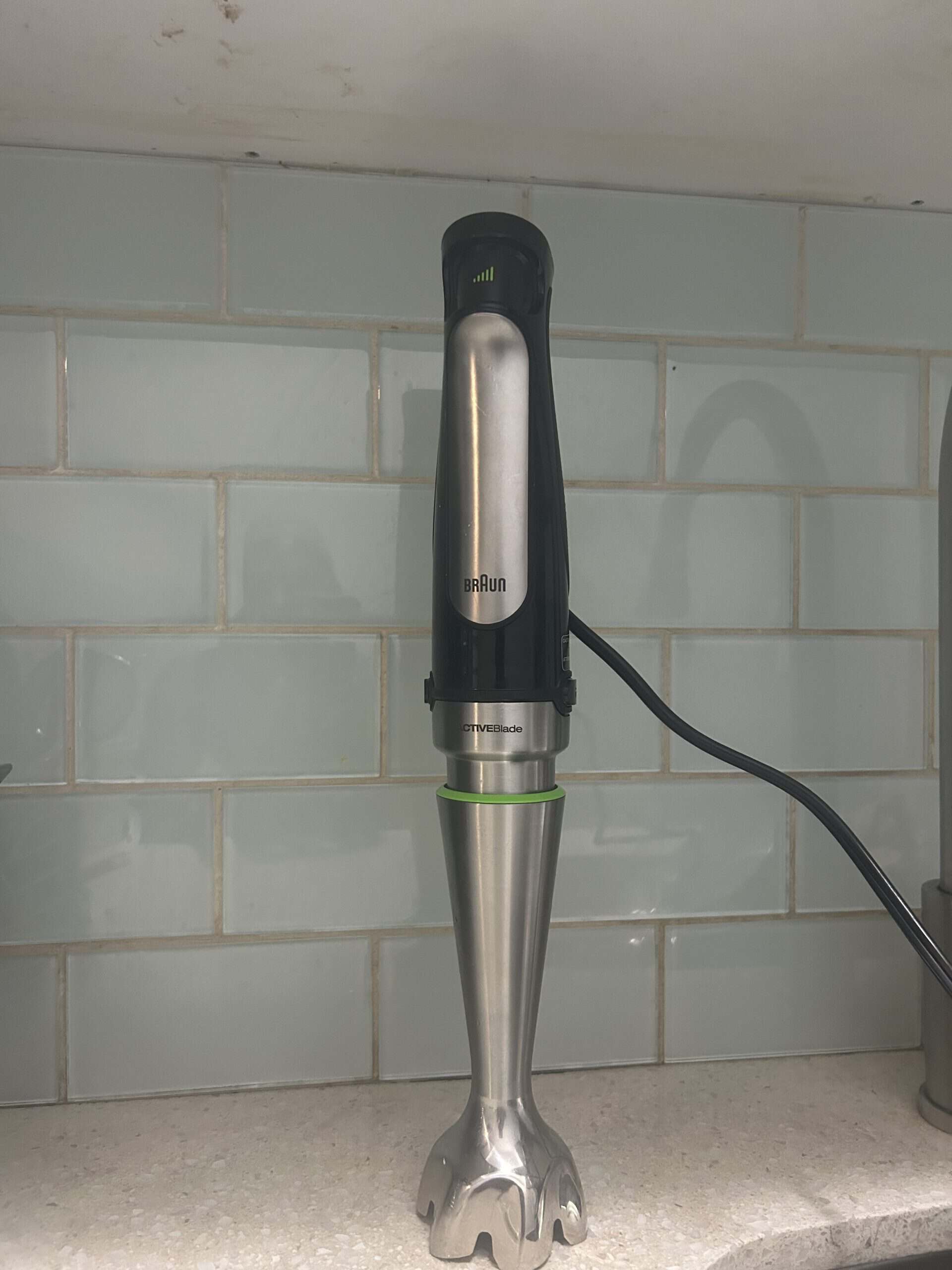
Hand Blender with Attachments
The core mechanism is a motor driving interchangeable heads — a blending shaft, a whisk attachment, a chopper bowl. Because the motor stays the same and only the head changes, each attachment does its specific job well rather than being a diluted compromise of the others.
Not Worth the Space
All-in-One Blender/Food Processor/Juicer Combos
These three jobs genuinely need different blade geometry and container shapes to do well. A blade optimized for liquefying is a poor fit for chopping vegetables evenly, and neither is a good fit for extracting juice efficiently. The result is usually a unit that’s mediocre at all three instead of good at any one.
“10-in-1” and “12-in-1” Multi-Cookers
The core pressure-cook/slow-cook/steam functions are genuinely useful (see above) — but past that, added functions like a yogurt-maker setting or an egg-cooker mode are often just a preset timer and temperature profile stapled onto marketing copy, not a meaningfully new capability. More listed functions doesn’t mean more real value once you’re past the first four or five.
Panini Press / Waffle Maker / Grill Combo Plates
Interchangeable cooking plates sound efficient, but each surface needs a different heat distribution and clamping pressure to work well — a waffle iron needs deep, even heat in a grid pattern; a panini press needs firm, flat pressure. Swappable plates on one shared hinge mechanism usually compromise both.
Coffee Maker + Blender or Coffee + Toaster Combos
These pair mechanically unrelated functions — a drip or espresso mechanism has nothing in common with a blending motor or a toasting element. There’s no shared core here at all, just two (or more) separate appliances sharing a single power cord and a single point of failure if one part breaks.
⚠ The real risk with “not worth it” combos isn’t just mediocre performance — it’s a single point of failure. If one function on a genuinely unrelated combo appliance breaks, you often lose the whole unit, including the functions that were working fine. A separate toaster and a separate coffee maker can each fail independently without taking the other down with it.
The Real Question Before You Buy
Don’t ask “how many things does this do?” Ask “do these specific functions share one genuinely good underlying mechanism, or are they different jobs stapled together for the marketing page?” The multi-cooker, the stand mixer with attachments, and the air fryer/toaster oven combo all pass that test. Most “5-in-1” and “10-in-1” gadgets that pair mechanically unrelated tasks don’t — and a good dedicated single-purpose tool usually beats a mediocre combo at every one of the jobs it claims to replace.
Frequently Asked Questions
Are multi-function appliances always a compromise?
No — it depends entirely on whether the combined functions share a genuinely compatible core mechanism. A multi-cooker’s pressure/slow-cook/steam functions share one design and aren’t compromised. A blender/juicer/food processor combo asks one blade and container to do three mechanically different jobs, and usually does none of them as well as a dedicated tool.
Is a 12-in-1 multi-cooker better than a basic 4-in-1?
Not necessarily. The core functions (pressure cook, slow cook, steam, sauté) deliver most of the real value. Additional listed functions beyond that are often just preset timer/temperature profiles rather than genuinely new capabilities, so a simpler model with the core functions done well is often the better buy.
What’s the actual risk of buying a combo appliance that pairs unrelated functions?
Beyond mediocre performance at each individual task, combo appliances that pair mechanically unrelated functions (like a coffee maker plus a blender) create a single point of failure — if one function breaks, you often lose access to the working functions too, unlike two separate appliances that fail independently.
How do I know if a multi-function appliance is worth the counter space?
Ask whether the functions share a real underlying mechanism (worth it) or are unrelated jobs bolted together for a longer feature list (usually not). Then ask honestly how many of the listed functions you’d actually use regularly — a genuinely great 4-function tool beats a mediocre 10-function one you only use two settings on.
Considering a Multi-Cooker?
See what the research actually says about pressure cooking versus other methods in our multi-cooker guide, then check current pricing below.
Shop Multi-Cookers →